Life Without Guardrails: The Most Shocking Thing About Iceland
Iceland didn’t just surprise us with waterfalls, glaciers, and volcanoes. It surprised us with what everyday life revealed about the people who call it home.
Before traveling there, we expected cultural differences. Every foreign country has its own customs, traditions, and way of life. We expected Iceland to have its own unique foods, language, and routines. What surprised us wasn’t any one difference, but how many seemingly unrelated observations all seemed to point toward the same underlying mindset.
Some of those observations were obvious. Others took nearly two weeks to notice. By the end of the trip, they had completely changed the way I thought about the country.
The weather was every bit as unpredictable as we’d been told. Even in June there were moments that felt more like late autumn than early summer. One hour could bring sunshine, the next wind and rain.
The landscape itself was equally striking. Nearly everywhere we turned there were towering mountains, glaciers, waterfalls, volcanic craters, black sand beaches, and views that stretched for miles. Spectacular scenery wasn’t reserved for national parks. It simply became part of everyday life.
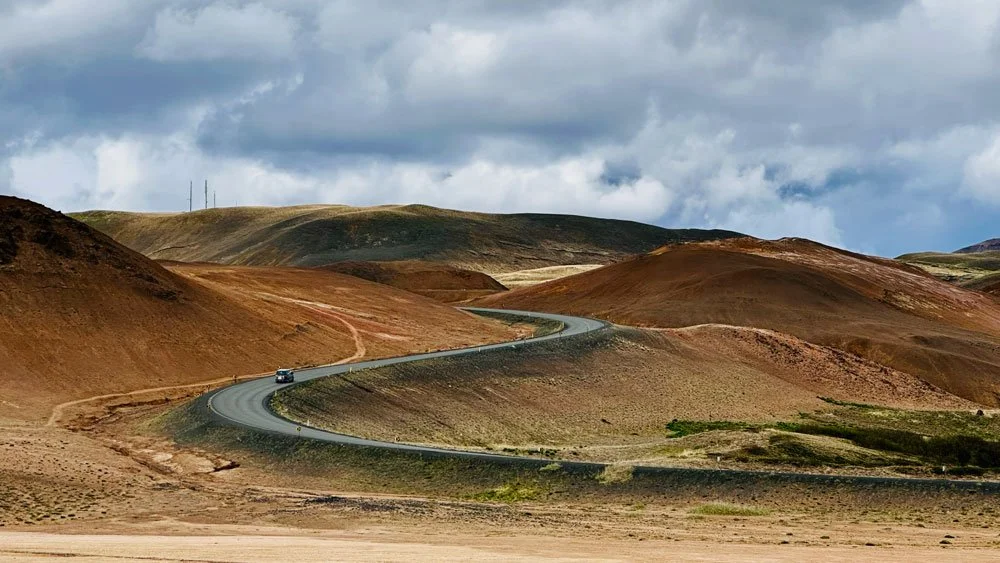
The road to Vogafjós
At the same time, Iceland was remarkably quiet. Outside of birds and the constant sound of the wind, there often wasn’t much else to hear. Even in popular places, silence felt like part of the landscape.
One surprise we hadn’t expected was the water. Whether flowing from a glacier-fed stream, a waterfall, or even the kitchen faucet, it was clean, cold, and refreshing. Even better, the water had a natural softening effect on our hair and skin without the use of moisturizers. And purchasing bottled water never even crossed our minds.
None of these observations seemed connected at first. Looking back, they began to feel like pieces of a much larger picture.
At many of Iceland’s most spectacular cliffs and waterfalls, there was remarkably little standing between us and a fatal mistake. A rope here. A small sign there. Often nothing at all. The expectation seemed obvious: you’re responsible for your own decisions.
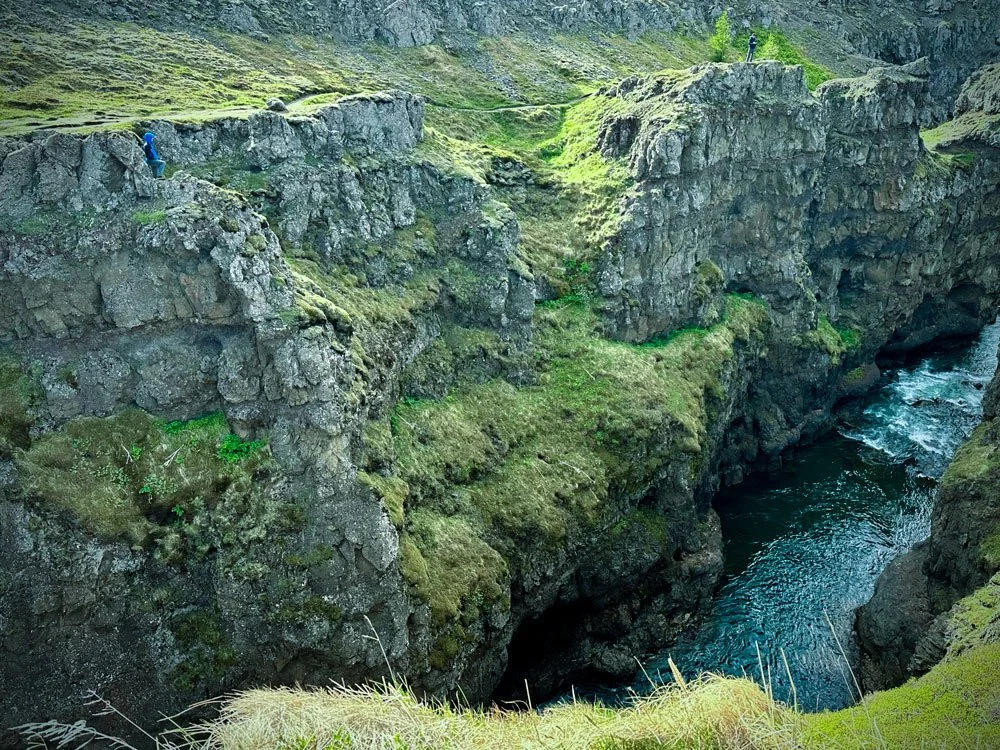
Can you spot David and Brock on the edges of the cliffs?
Back home, many similar locations would likely have fences, railings, warning signs, or employees directing visitors away from danger. In Iceland, we rarely saw any of that.
It left us wondering if the expectation wasn’t that every danger should be removed, but that people would recognize it and act accordingly.
Other parts of daily life seemed to reinforce that impression.
Stores often closed much earlier than we were used to, and shopping options were more limited than at home. It wasn’t difficult to find what we needed, but life didn’t appear to revolve around maximum convenience.
We came away with the impression that convenience isn’t one of Iceland’s highest priorities—not because people don’t appreciate it, but because the environment has always demanded something else first.
When weather can change by the hour, volcanoes can reshape the landscape, and nature sets the rules, convenience may simply become less important than adaptability.
By the end of twelve days, none of these observations felt isolated anymore.
The unpredictable weather.
The powerful landscape.
The lack of barriers.
The quiet.
The early-closing stores.
The trust placed in visitors.
Each seemed to point toward a culture that has learned to live with uncertainty instead of trying to eliminate it.
I don’t pretend to fully understand Icelandic culture after a single visit. But we left with the impression that generations of living in a beautiful yet unforgiving environment have shaped a remarkable degree of self-reliance.
Perhaps that’s why Iceland often felt like a country without guardrails—not because safety doesn’t matter, but because personal responsibility comes first.
Life without guardrails isn’t really about cliffs or waterfalls. It’s about a mindset. We left Iceland with the impression that people aren’t expected to be protected from every challenge—they’re expected to meet it. And perhaps that’s one of the greatest strengths a society can develop.
