The Day We Stood on the Line That Moves
When planning a trip to Iceland, most people focus on waterfalls, glaciers, volcanoes, and black sand beaches.
We planned a day around a line.
Not just any line—a line that moves.
One of the experiences I was most excited about before leaving home was visiting Grímsey, the northernmost inhabited island in Iceland and the only part of the country that lies inside the Arctic Circle. Reaching it would require a ferry ride across the Arctic Ocean and nearly an entire day devoted to a destination that most Iceland visitors and many Icelandic citizens never see.
At the time, it seemed a little crazy. After experiencing it, I would do it again in a heartbeat.
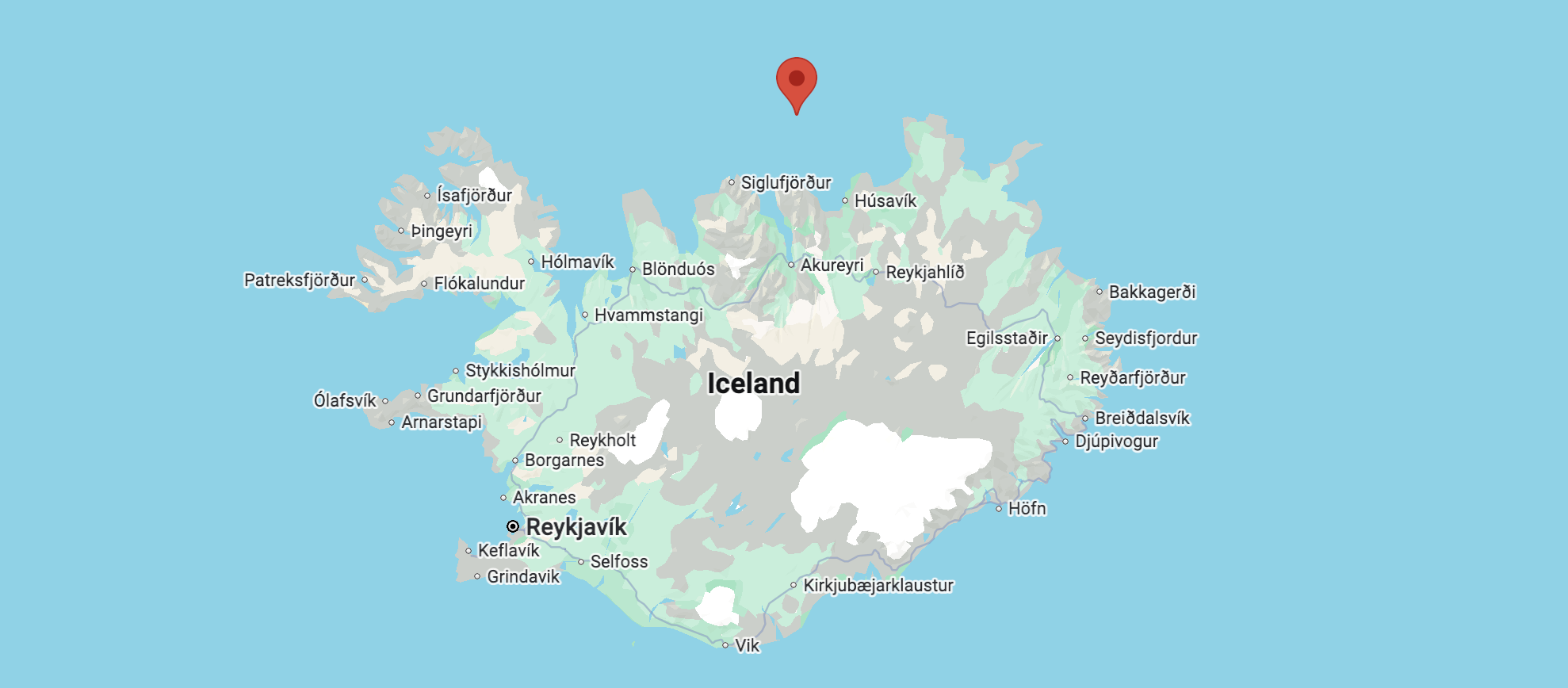
Location of Grimsey Island, Iceland
The day began early with a quick breakfast before making the hour-and-fifteen-minute drive north to Dalvík. The ferry departed at 9:00 a.m., and from the moment we stepped aboard, it was obvious this wasn’t going to be an ordinary boat ride. The wind whipped across the deck, waves crashed against the hull, and spray occasionally blew over the sides onto passengers brave enough to remain outside. Towering mountains and glacier-covered peaks rose from the surrounding fjords, creating some of the most dramatic scenery we had seen anywhere in Iceland.
Unfortunately, the beauty of the journey came with a price. As the ferry pitched and rolled through the waves, seasickness began working its way through our family. Becca and I both became nauseated, and James and Brock each ended up getting sick multiple times during the crossing. About halfway through the trip, we realized this wasn’t going to be one of those easy travel days where everything went according to plan. By that point, I was beginning to wonder whether the Arctic Circle would be spinning when we got there. If we wanted to enjoy Grímsey, we were going to have to push through.
When the ferry finally reached the island, we stepped into another challenge. The skies were gray, fog drifted across the landscape, and the Arctic wind immediately cut through our jackets. Within minutes, we were pulling on layer after layer of clothing. Comfort, however, wasn’t the reason we had come.
We were there for two things: to see puffins and to stand on the Arctic Circle.
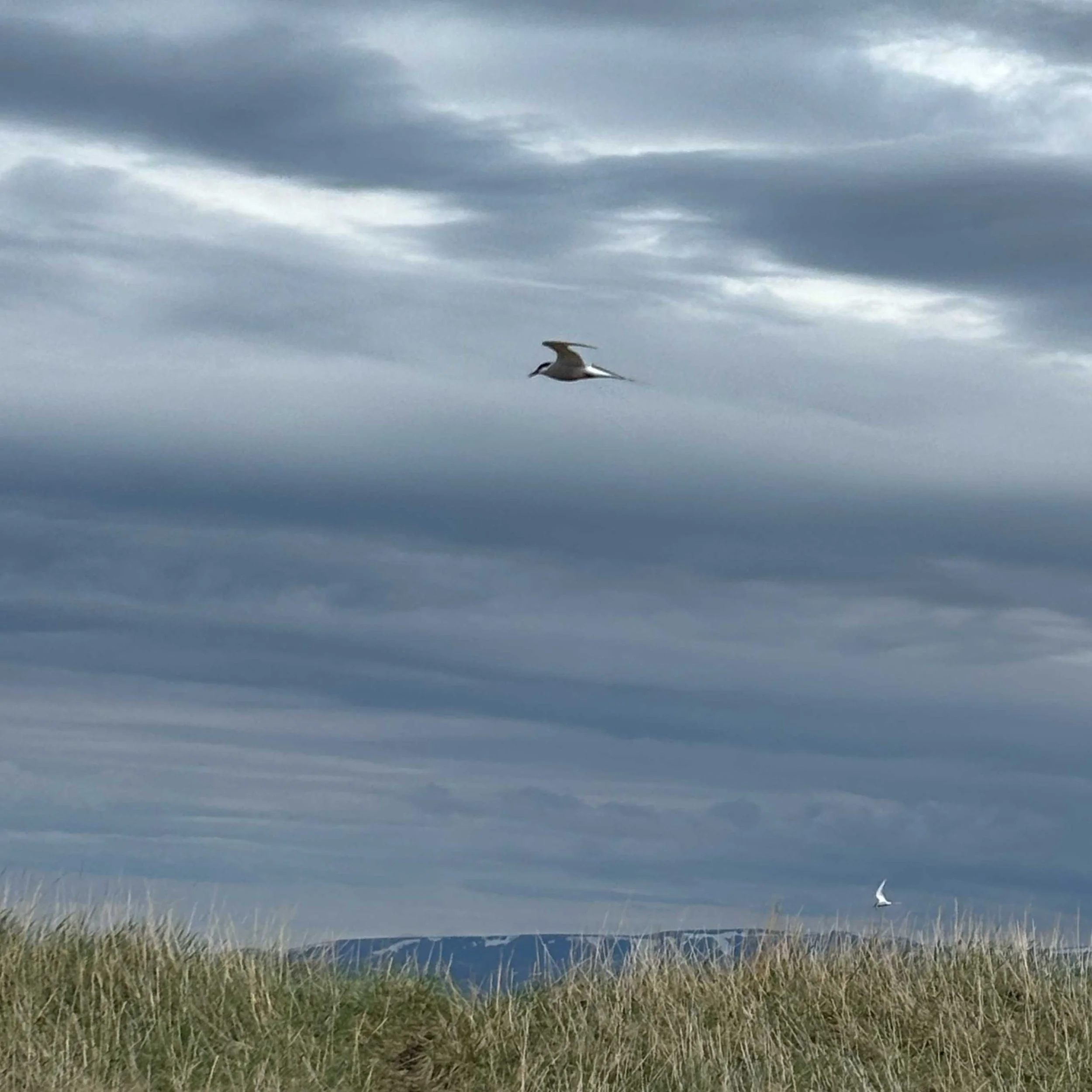
As we started hiking toward the northeastern corner of the island, we quickly learned that puffins weren’t the only birds calling Grímsey home. Before the trip, we’d heard puffins described as the curious professors of Iceland’s bird world and Arctic terns as the angry security guards. That description turned out to be remarkably accurate. As we walked along the trail, the terns began dive-bombing us from every direction. Apparently we had wandered a little too close to their nesting territory. They swooped low over our heads, circled back repeatedly, and made their displeasure very clear.
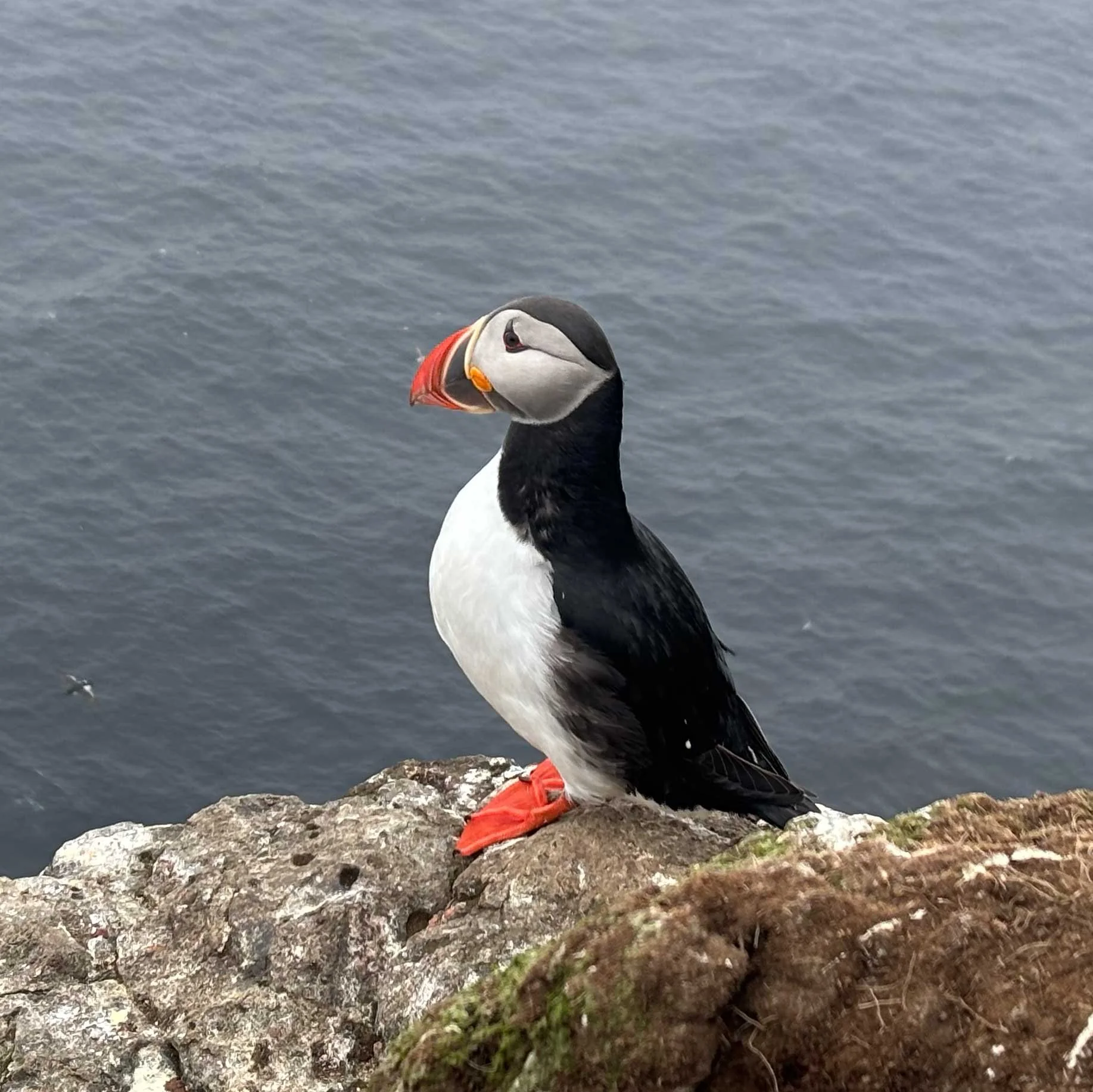
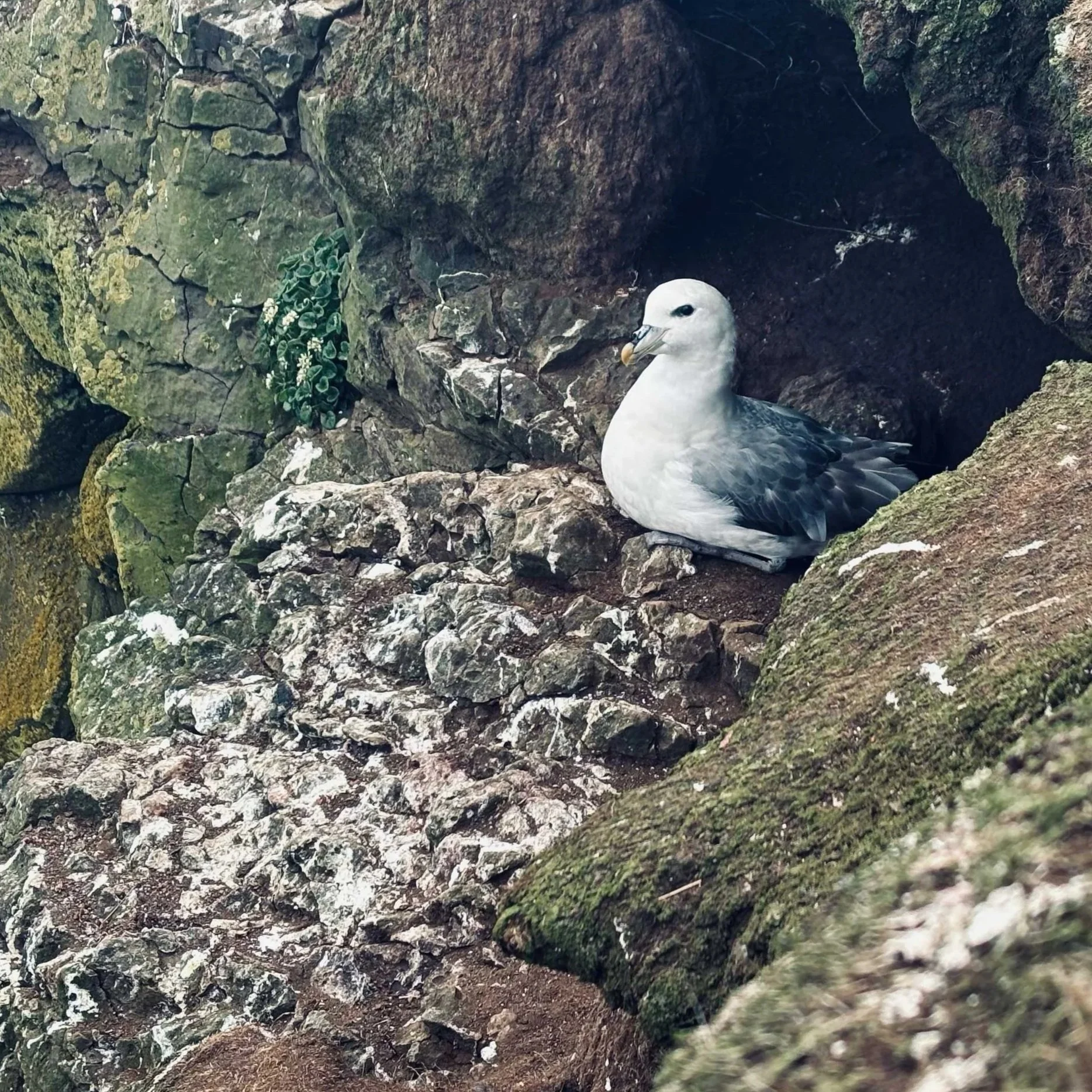
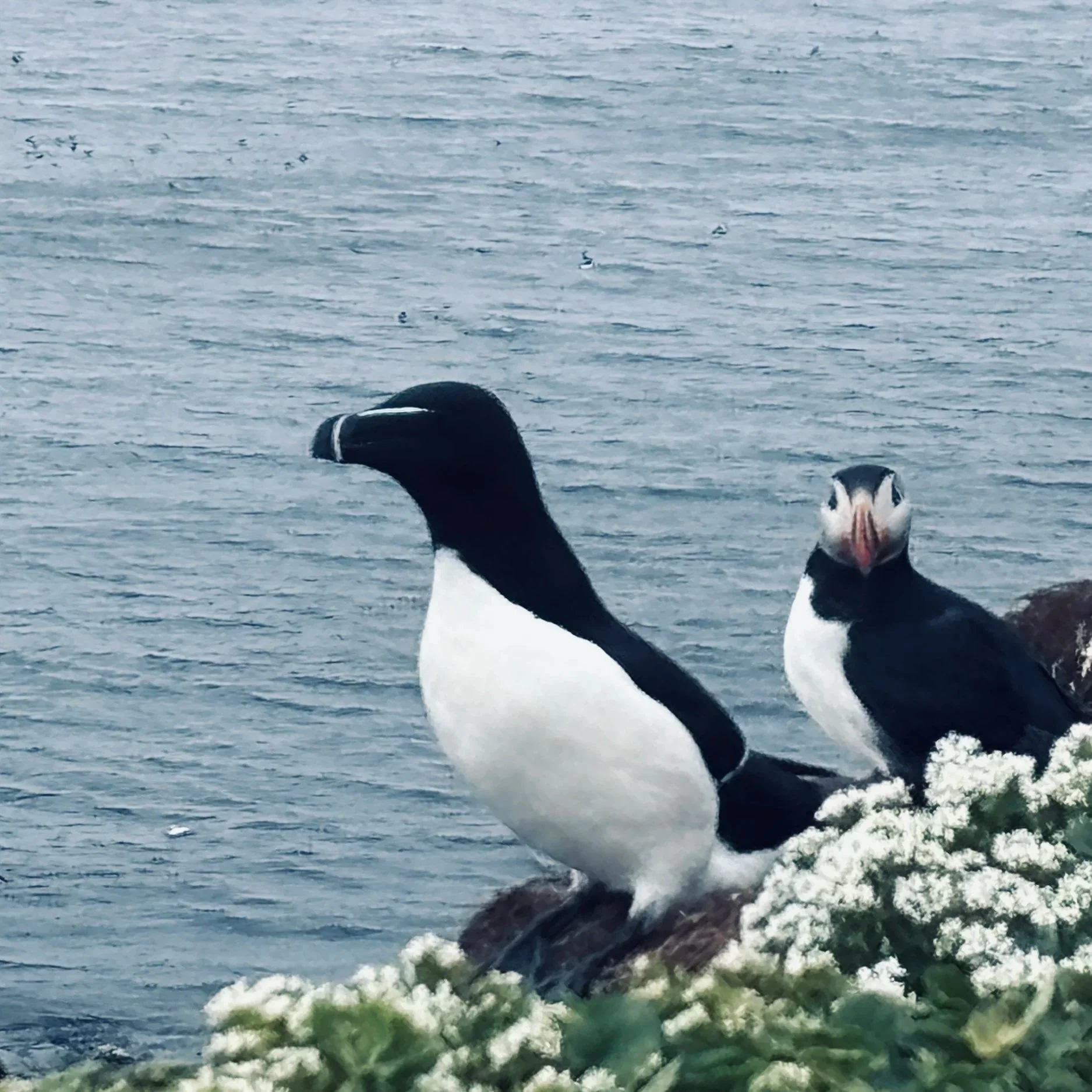
Once we moved beyond their territory, however, the stars of the island finally appeared. At first there were only a few puffins scattered along the cliffs. Then there were more. Soon they seemed to be everywhere.
I dropped to the ground and began doing what can only be described as an army crawl toward the edge of the cliffs. Inch by inch, I worked my way closer while trying not to disturb them. The remarkable thing about puffins is how unconcerned they are by people. At six or eight feet away, they barely seemed to notice me. They have a funny routine they repeat constantly. First they look directly at you. Then they stare straight ahead. Then they turn and look out toward the ocean. Over and over again, like tiny professors deep in thought.
The closer I got, the more fascinated I became.
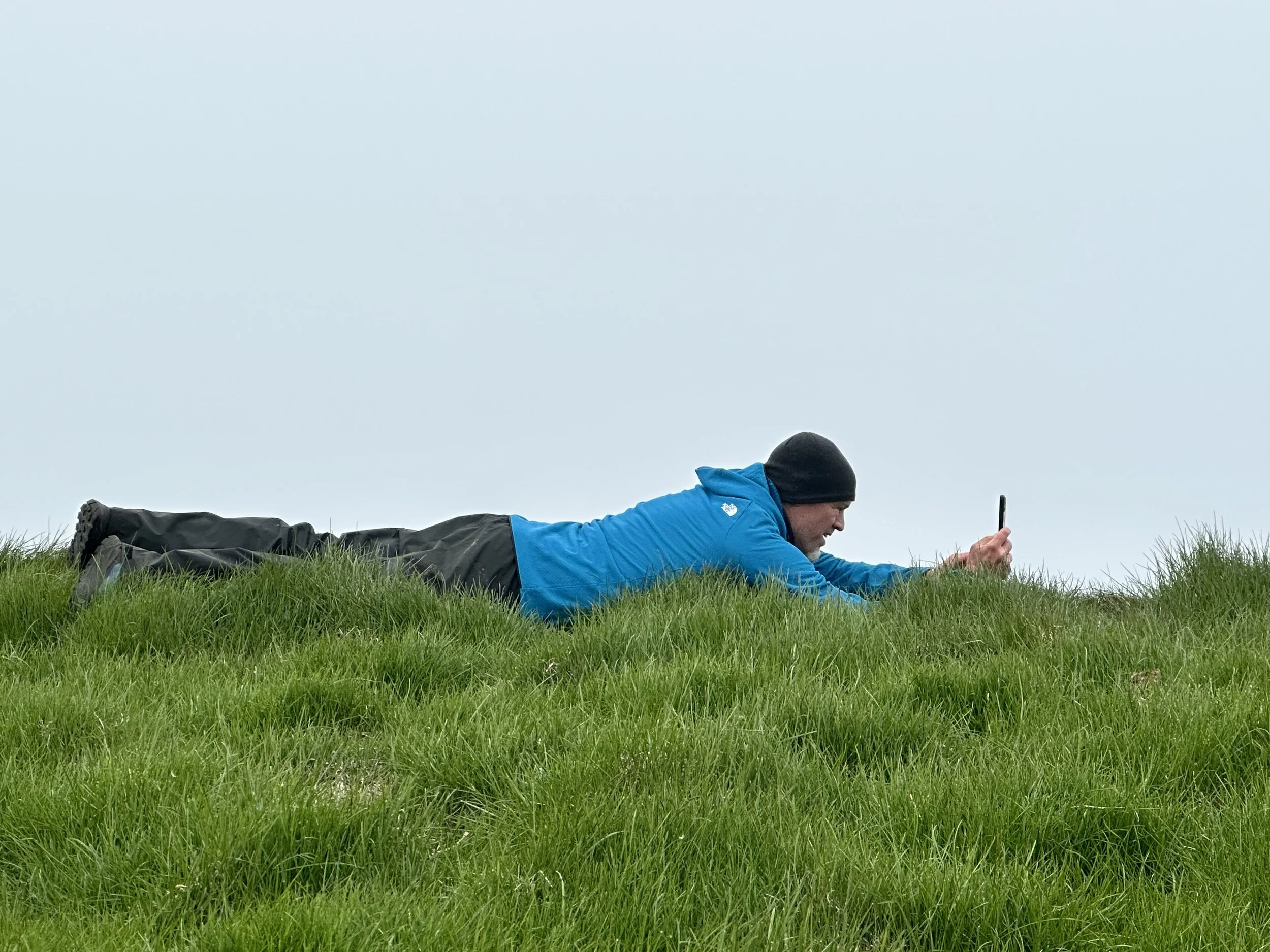
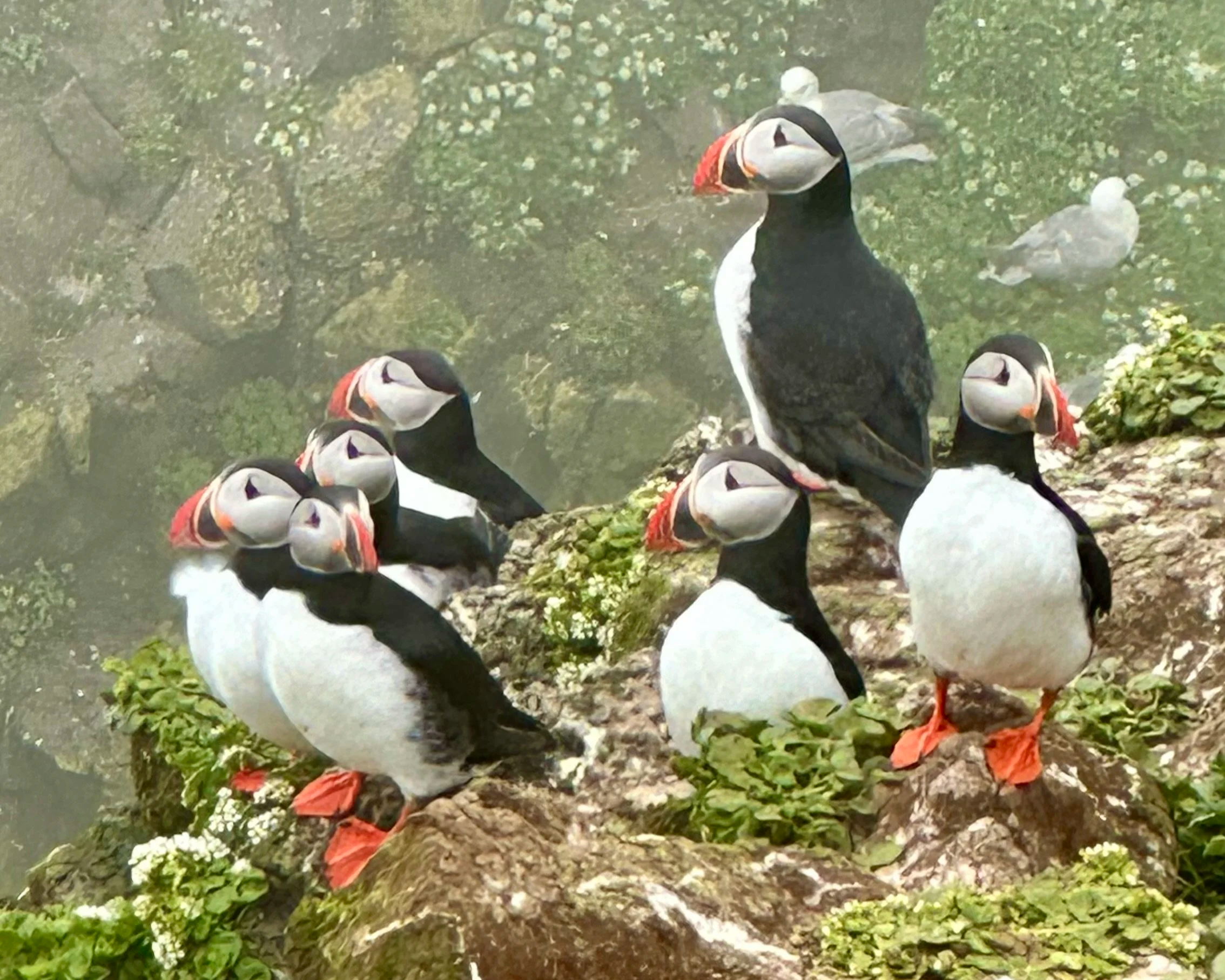
We continued along the cliffs, stopping often to take photos and admire the scenery. Looking north across the ocean, it was hard not to think about where we were. There was no land ahead of us. The next stop in that direction was the North Pole. For a family from Pennsylvania, that realization carried a certain weight. We weren’t just sightseeing anymore. We had reached one of the edges of the inhabited world.
Eventually we arrived at Orbis et Globus, the famous Arctic Circle marker perched on the northeastern corner of the island. The massive concrete sphere weighs seven tons and was specially transported to Grímsey. Running through its center is a circular opening that marks the Arctic Circle itself.
What makes the monument unique is that the line it marks refuses to stay still.
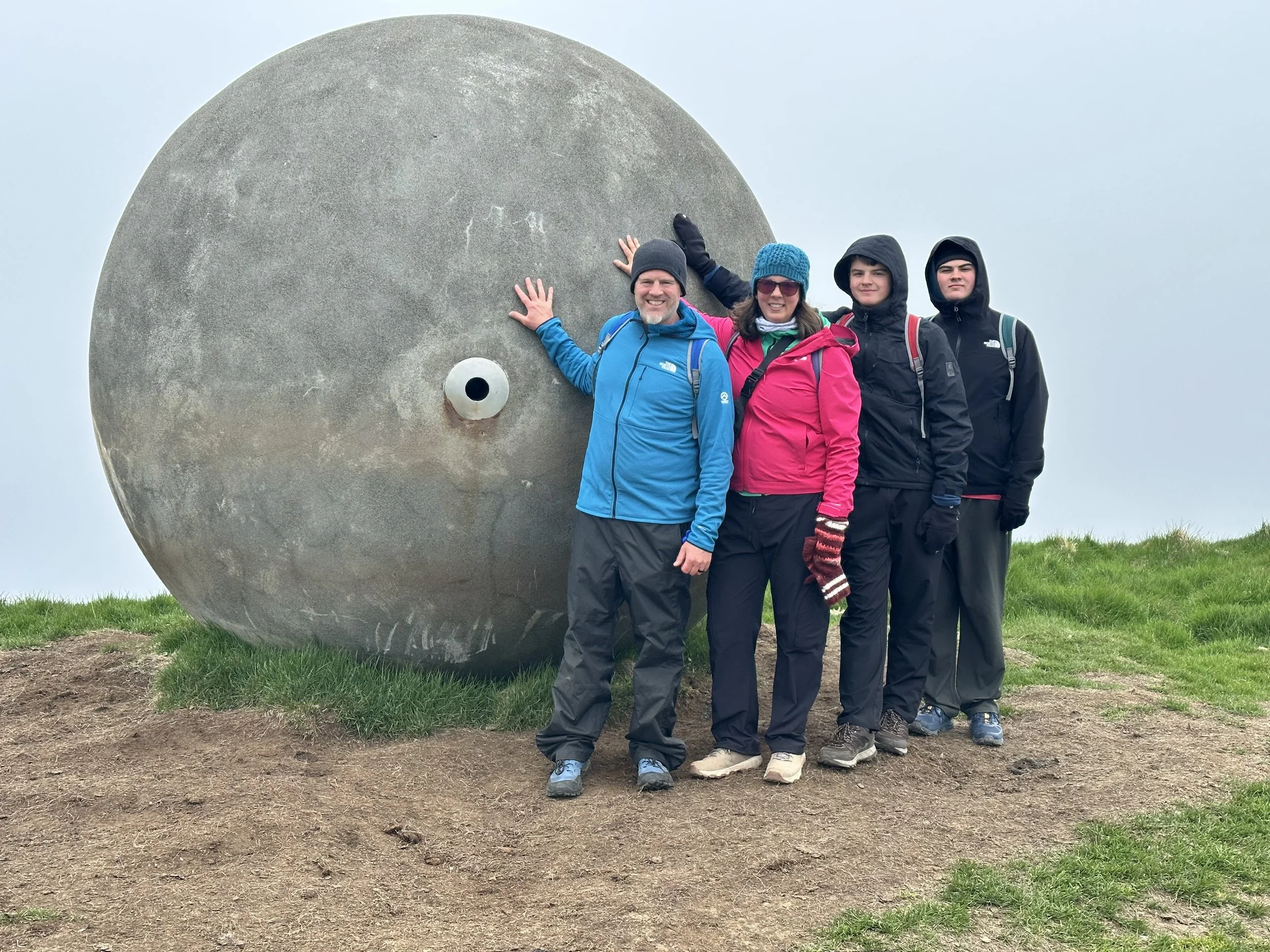
Orbis et Globus, Arctic Circle
Because of the Earth’s changing axial tilt, the Arctic Circle moves north a little every year. The shift is gradual—roughly 40 to 50 feet annually—and scientists expect that sometime around 2050 the Arctic Circle will move completely off Grímsey Island. The marker will remain, but the line it represents will have moved on.
Standing there, I couldn’t help but think about our own journey. As we continue working through our Epic Travel Plan, there will be milestones along the way. Someday we hope to stand on the equator. We hope to stand on the Antarctic Circle. We hope to reach all seven continents and experience landscapes, cultures, and places that today exist only as pins on a map. Standing on the Arctic Circle felt like the first of those great geographic milestones.
Of course, we couldn’t leave without continuing passed it. After spending time at the monument, we continued north toward the cliffs where I had heard the largest concentration of puffins could be found.
The views became even more dramatic.
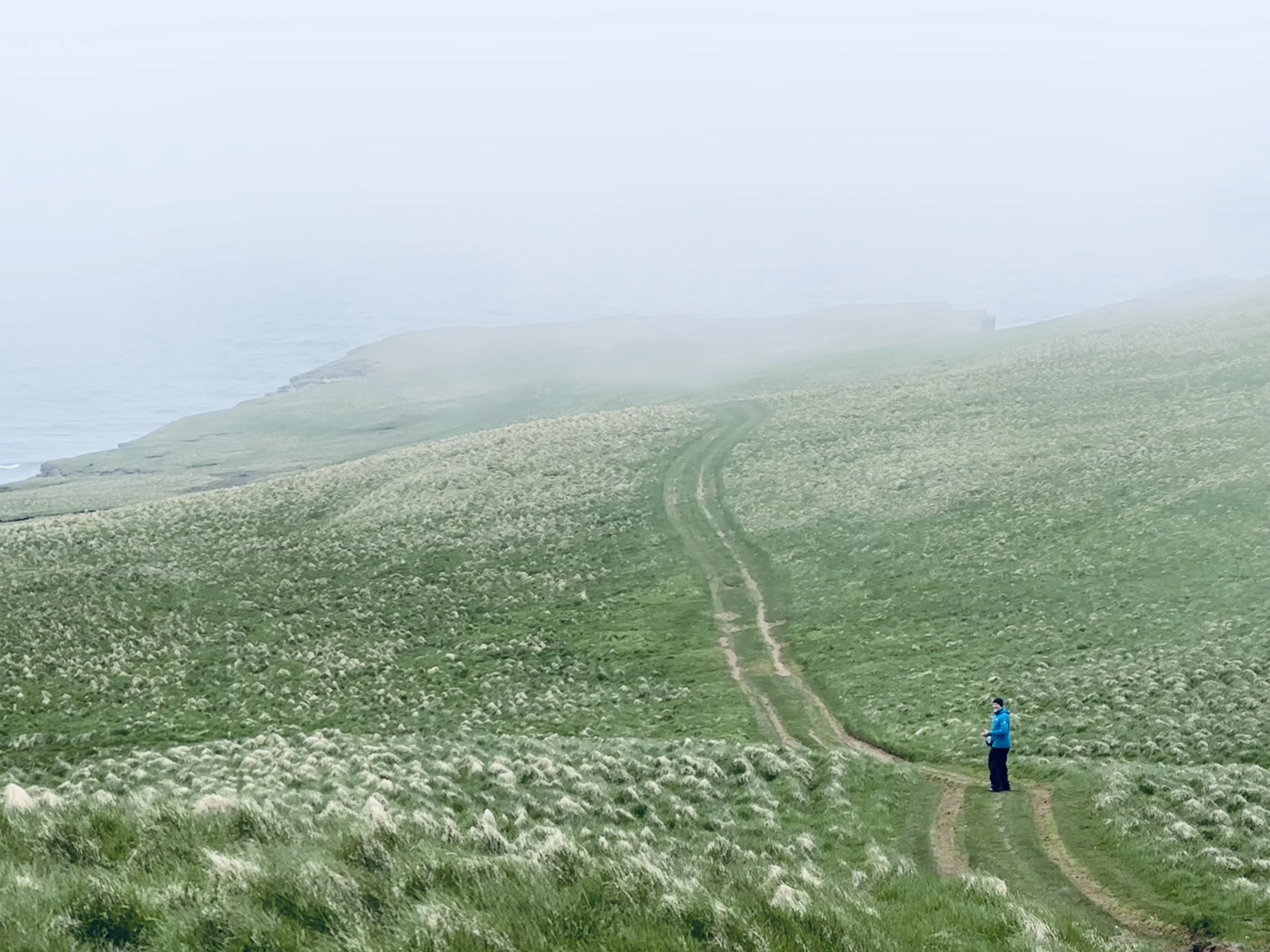
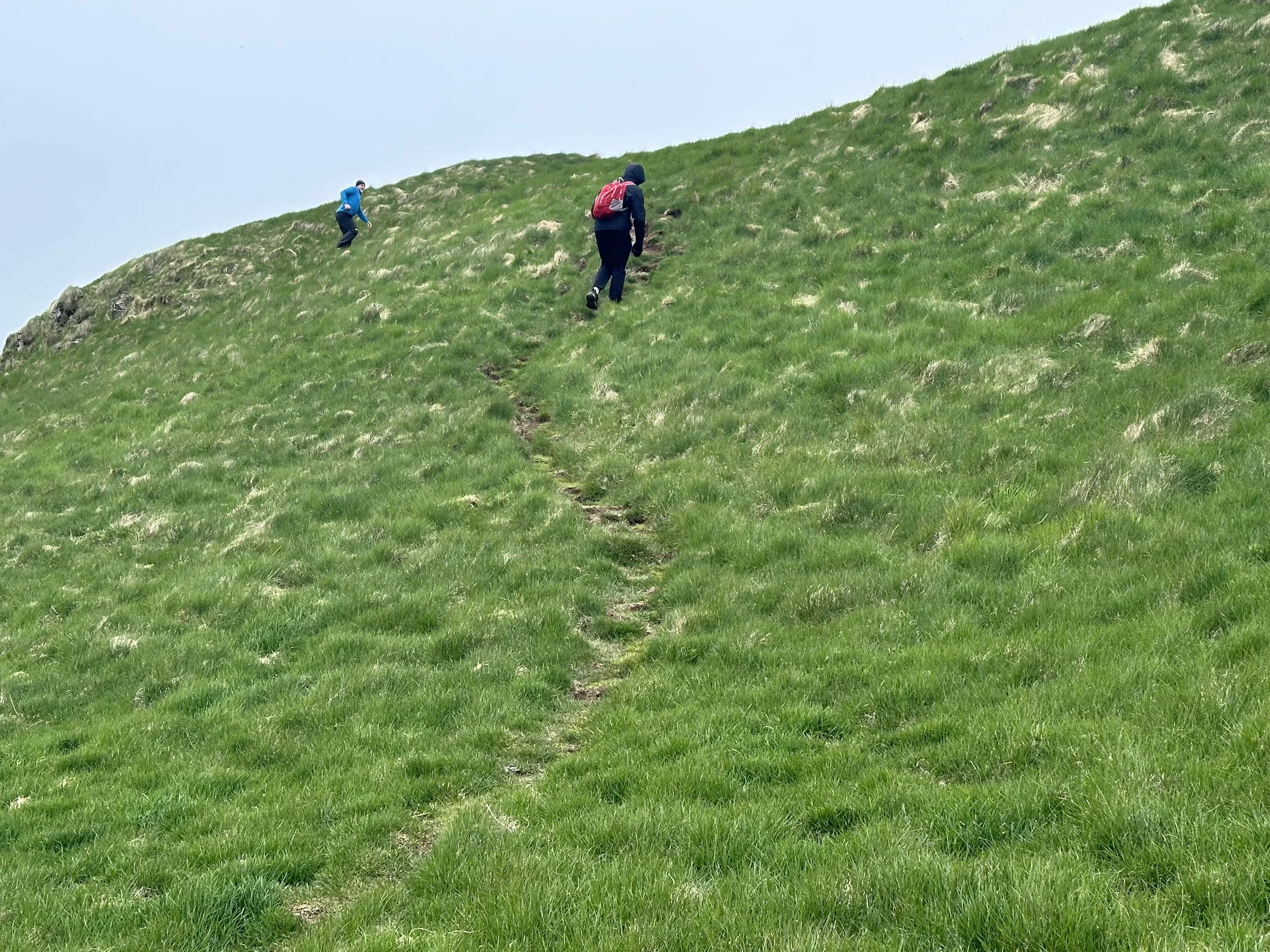
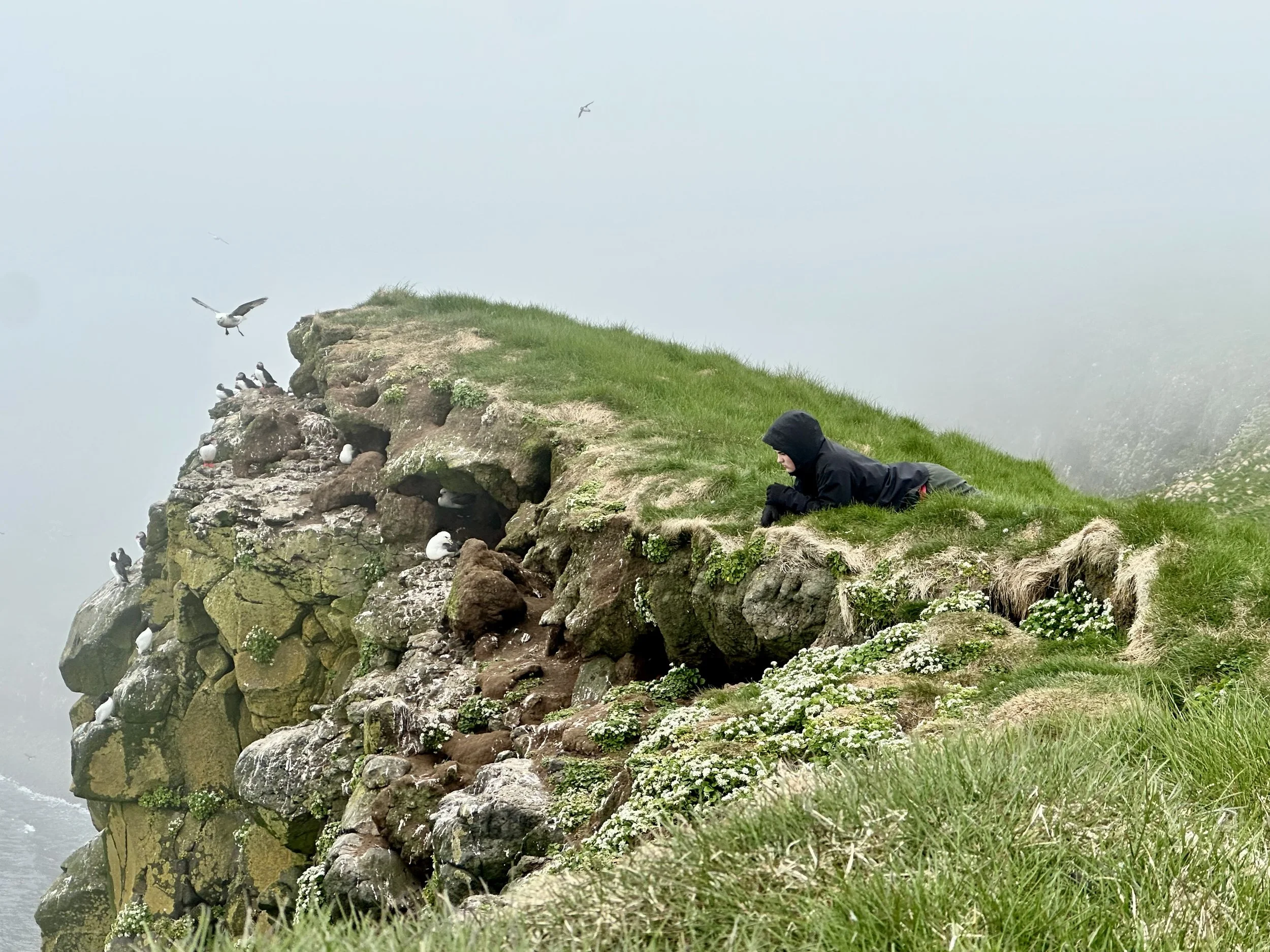
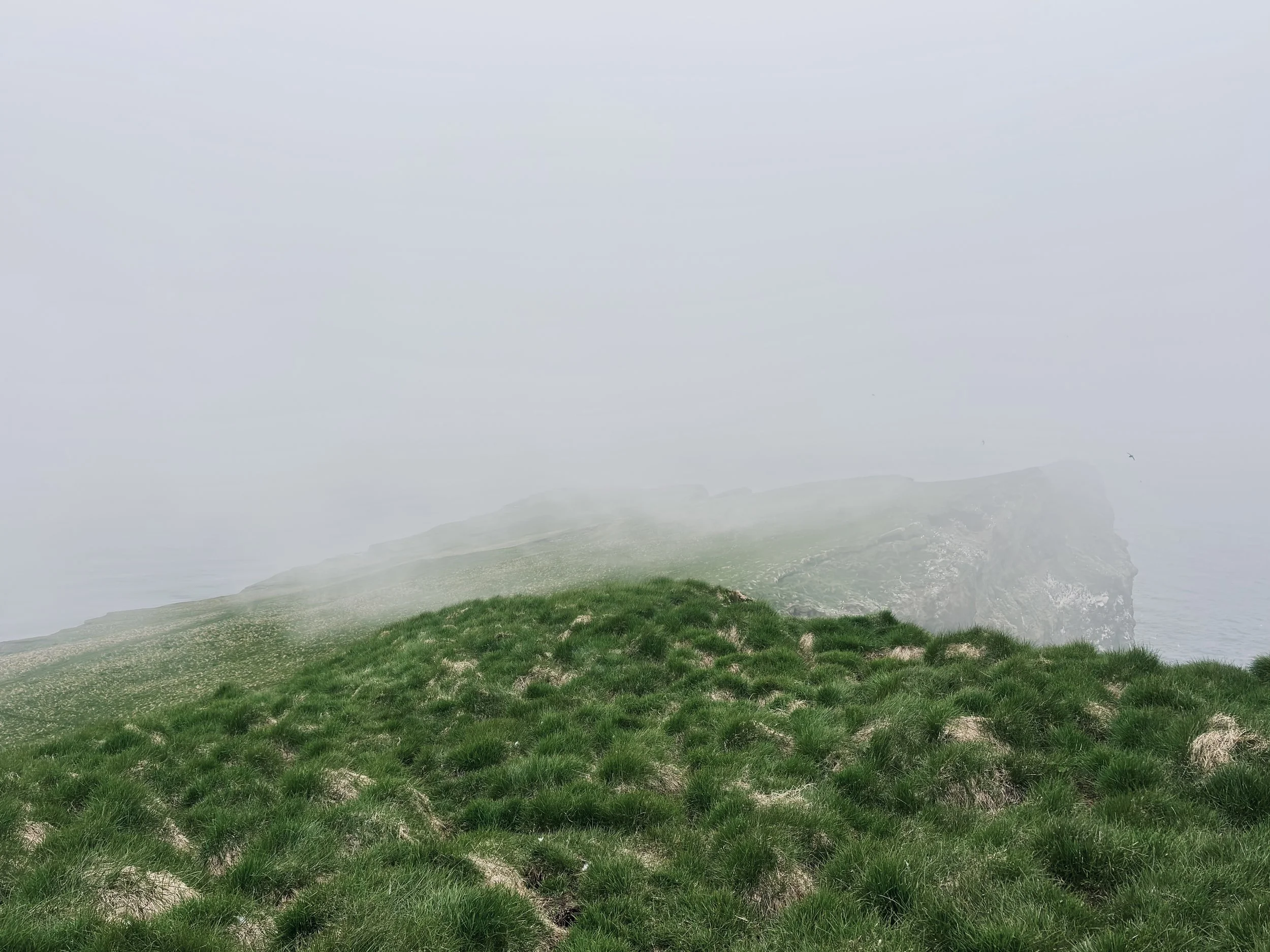
At one point I carefully looked over the edge and immediately felt my stomach drop. The cliffs appeared almost impossibly high. Later I learned they ranged from roughly 275 to 330 feet above the ocean below—the height of a 25- to 30-story building.
The puffins, meanwhile, seemed completely unbothered.
A few allowed me to approach within three or four feet, close enough to capture some of my favorite wildlife photographs from the entire trip. Watching them perched above the crashing ocean, completely at home in a place that felt wild and remote, was one of those travel moments that stays with you long after the trip ends.
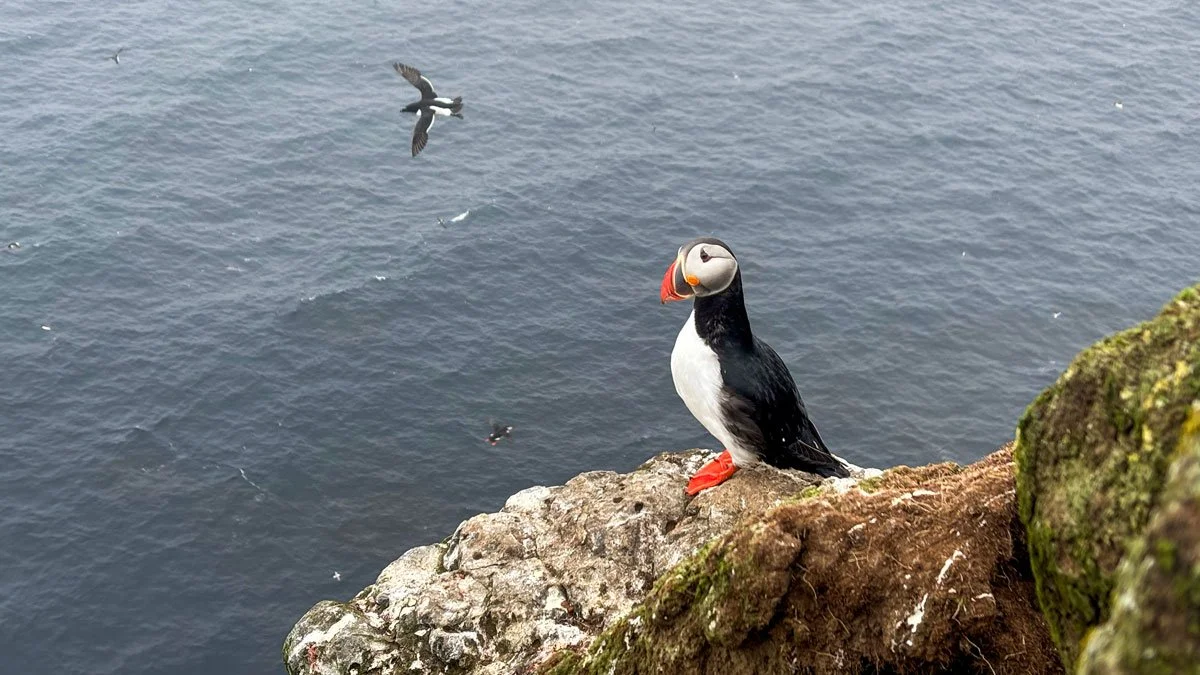
My favorite puffin photo captured at the northern cliffs of Grimsey Island, Iceland
The ferry ride back was thankfully much easier. Armed with Dramamine and a little more experience, we made the return crossing without incident. By evening we were enjoying a great meal, feeling much better, and reflecting on a day that had turned out to be one of the highlights of our entire Iceland adventure.
By the end of the day we’d done much more than just stood on a line.
